
Inside this post is my affiliate links. If you click on the links and make a purchase, I will make a small percentage from the products you purchase.
The time changes we go through during the year always confuses me. I wish when Charlie was #Homeschooling we had taken the time to learn about #DaylightSavingsTime which we didn’t do and that was my fault.
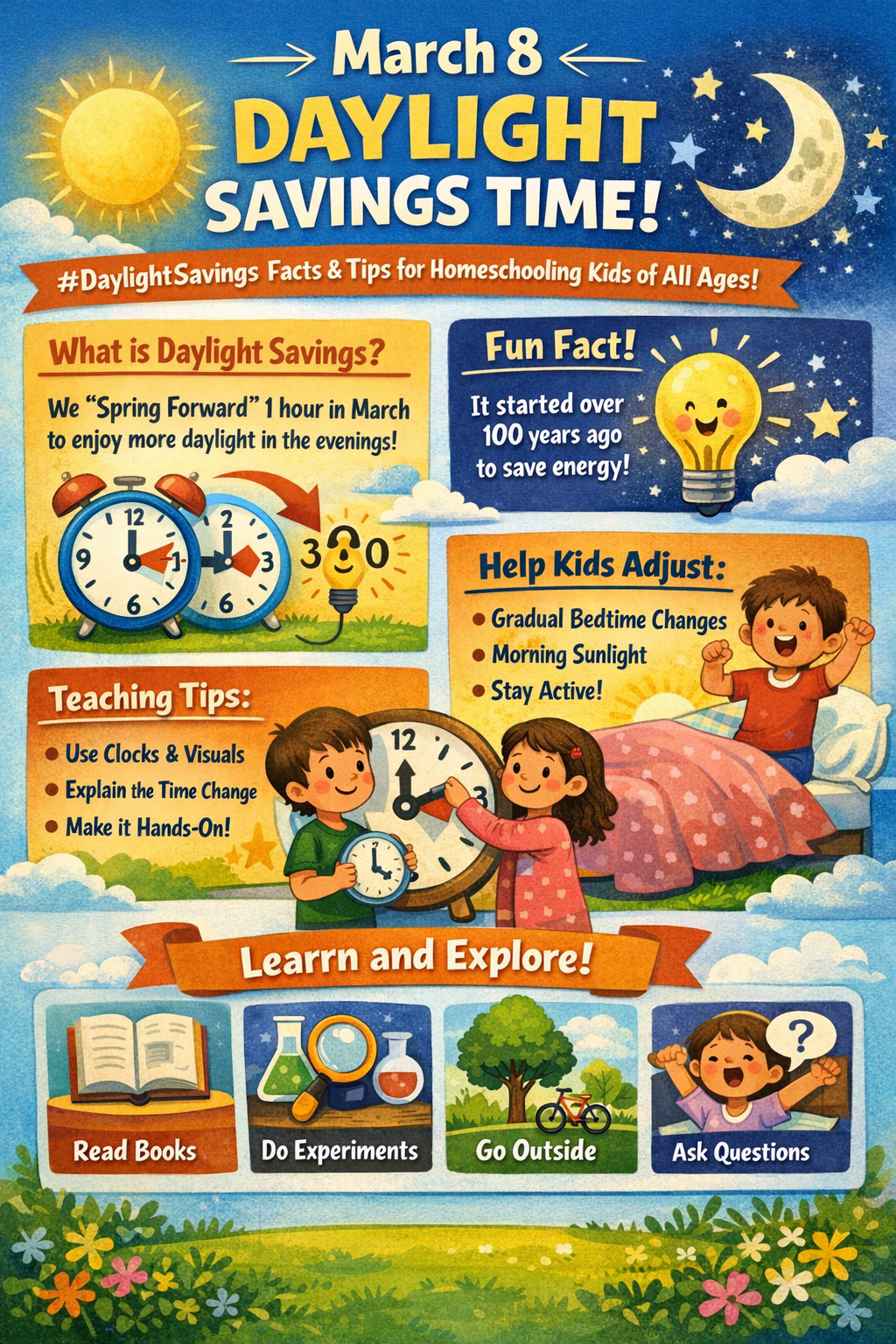
I didn’t want you to miss out on a learning opportunity for your family. I wanted to let you know Daylight Savings Time is the perfect opportunity to blend science, history, and real‑life learning into your homeschool day.
Whether you’re helping little ones understand why bedtime feels different or guiding teens through debates about DST’s usefulness, this time change offers meaningful learning moments for every age. Enjoy the extra sunshine and make it a day of curiosity and connection!
Below is a polished, family‑friendly, homeschool‑ready content package with facts, tips, and activities for children of all ages. If you enjoyed the information I’ve shared with you, please leave me a comment. Or if there is something you would like to see on here let me know.
What Is Daylight Savings Time?
- Daylight Savings Time (DST) is when we move clocks forward by one hour in Spring to enjoy more daylight in the evening.
- In the fall, we “fall back” and return to Standard Time.
- The U.S. first adopted DST widely during World War I to save energy.
- Today, Daylight Savings Time is used to make better use of natural daylight and encourage outdoor activity.
Fun & Kid-Friendly Facts
| Age Group | Fun Fact |
|---|---|
| Preschool | “Spring Forward” means the sun stays up longer for evening playtime. |
| Elementary | Not every state uses Daylight Savings—Hawaii and most of Arizona skip it. |
| Middle School | DST was first proposed by Benjamin Franklin in 1784. |
| Teens | Studies show DST can affect sleep cycles and productivity for a few days. |
Homeschool Teaching Tips (All Ages)
Preschool & Kindergarten
- Use toy clocks to show how the hour hand jumps forward.
- Read a simple picture book about time or bedtime routines.
- Do a “Sunshine Walk” in the evening to notice the extra daylight.
Elementary
- Have kids change all the clocks in the house (with supervision).
- Create a Daylight Tracker Chart: sunrise/sunset times before and after DST.
- Do a mini‑science lesson on how the Earth’s tilt affects daylight.
Middle School
- Explore the history of DST and why some places don’t use it.
- Graph sleep patterns for a week before and after the time change.
- Debate: “Should we keep Daylight Savings Time?”
High School
- Research the economic and energy impact of DST.
- Write a persuasive essay: “Is DST outdated?”
- Study circadian rhythms and how light affects the brain.
Helping Kids Adjust to the Time Change
- Shift bedtime by 10–15 minutes for a few nights before DST.
- Get morning sunlight to reset the body clock.
- Keep evenings calm: warm bath, quiet reading, dim lights.
- Maintain consistent wake‑up times.
Book & Activity Ideas
Create a “Why We Change the Clocks” mini‑poster
Books:
Telling Time (various early‑reader editions)
The Very Hungry Caterpillar’s Day & Night (preschool)
A Wrinkle in Time (middle school tie‑in for time concepts)
Activities:
Make a paper plate clock
Track shadows at different times of day
Thank you,

Glenda, Charlie and David Cates
Let us know if you enjoyed this post!

Like

Love

Happy

Haha

Sad