
When you get to July, and the air turns hot and dry, any seasoned homesteader knows they should expect wildfires. They’re part and parcel of the season, just like picking apples or splitting wood for winter. However, just because wildfires are familiar, that doesn’t make them any less dangerous.
Now, if you’re near the fire itself, the danger is apparent from the start. The problem is when we see it going off in the distance, thinking we’re safe only for our house to catch on fire seemingly out of nowhere.
It might seem bizarre, but the cause is perfectly explainable: 90% of homes lost in wildfires are those that come into contact with embers that are picked up by the wind and carried for up to a mile, falling in through doors, windows and chimneys, setting people’s houses on fire.
As a firefighter who was dead center of the 2018 Woolsey wildfires and had his own family and home put in the line of danger, I learned the hard way that the best moment to stop a fire is before it starts. It’s better to invest some time and effort into a handful of basic defensive measures against these embers now than to react to the crisis when it knocks on your door, or floats down your chimney.
How Embers form
During a wildfire, you have large quantities of plant matter being burned away, which causes it to release gas and moisture into the air in the form of smoke, losing a lot of its weight in the process.
Eventually, bits like branches, leaves, bark, or grass lose so much weight that they break down into particles that get carried away by the wind up to a mile in distance, at least in more conservative estimates, and in extreme cases that can quickly become ten miles instead.
These particles glow red, and carry enough heat and energy to start new fires in other places, including homes, where, due to their small size, they fit through the narrowest of gaps. This makes windborne embers quite a destructive force, and the reason why, even if you only see the fire as a column of smoke off in the distance, that doesn’t mean you’re any safer than people experiencing it up close.
The amount and reach of the embers depends on things like humidity, and how strong the winds are blowing. If the air is dry, and the winds faster, embers can sustain themselves for longer and travel farther.
Find The HotSpots
So how do we stop wildfire embers from causing you to lose your home? I like to start with some scouting to spot the places more prone to become a problem, that way it becomes easier to prioritize.
You can start close to home, looking at the foundations, the sides and any crevices where debris tends to gather. Just think about the spots that tend to gather the most dust, those annoying corners where leaves funnel in and you have to keep cleaning tend to be those that get the most wind.
After securing your house’s immediate surroundings, it’s time to check decks and porches, which often have undersides that trap all kinds of material. When looking in these areas, question if the woodpile you’ve been storing are stacked too near each other, if they are, move them 30 feet away.
The same goes for outbuildings like toolsheds, especially if they feature vents that might seem inviting for birds or squirrels. Also remember to check eaves and overhangs, and most of all, generators and propane tanks.
Don’t neglect your landscape either. Dry grass patches, mulch beds, and fences that touch wild areas are also prime spots for new fires to start. You can test these out by throwing some confetti on a windy day and seeing where most of it lands. Mark your findings on a layout of your property and it’ll be much easier to prioritize.
Creating Buffer Zones
One of the best ways to protect your home from windborne embers falling down is to establish buffer zones where there’s nothing a potential fire could use as fuel. If the ambers land on something non-flammable, they’ll fizzle away naturally.
You can set up buffer zones around your buildings in layers. The first five feet out should be stripped bare, with nothing but dirt, gravel or stone. Extending to 30 feet, you can keep things lean with low cut grass, and spaced out plants.
Something I always advise people to do is avoid plant ladders that would allow the fire to climb up, so take care of any weeds and shrubs where they shouldn’t be. Goats tend to make for good allies in this.
Beyond the 30 feet line, and all the way up to 100 feet, your main objective should be to keep the woods clean, removing dead trees, dry branches and breaking up the denser thickets where you can. If (and only if) you know how, you can try doing controlled burns when the weather is damper and you’ve checked with local authorities.
This project will require a good rake, a shovel, and a pruning saw. You don’t have to do everything at once if you don’t have the time, nor are you sterilizing your land, treat it like your weekend hobby and a part of building your garden.
Sealing Techniques
Now, when it comes to protecting the buildings themselves, the main strategy is to seal up all the holes and gaps through which an ember could slip through. In fact there’s a name for this: home hardening.
We’ll start with the attic and the foundation, both of which need fine metal mesh screens with 1/16 inch holes at max stapled securely on all gaps. It’s also a good idea to add spongy filter material like you see in SAFE SOSS setups to your gable ends, which are to be fitted over the mesh to keep out the finer ash without blocking airflow.
Then we have doors and windows. The best call is to install weatherstripping along the edges using foam tape or vinyl bulbs from the feed store. For sealing the thresholds, you can use bottom sweeps (made of either bristle or rubber) and caulk cracks with fire rated silicone around the frames since they last longer.
The same principle applies to our buildings. Fill up any wall seams with foam and cover the dryer vents with louvered caps that you can close up after using. You can test them by lighting up incense and looking out for drafts affecting the smoke.
Roof and Gutter Maintenance
Naturally, your roof is the most vulnerable part of your house. Make a point out of inspecting it at least twice a year, clearing up debris with a broom or leaf blower. Gutters tend to be a problem because they catch all sorts of leaves, needles and twigs, but you can prevent that by installing snap-in mesh guards.
Roofing material is also important. If you’re going with asphalt shingles, they should be flat and kept intact, any seams should also be sealed off with roofing cement. It’s also very important to fit your chimney cap with a spark arrestor, as well as wire meshing for catching internal embers.
Finally, if you have overhangs, trim branches to keep them at least 10 feet away.
Securing Vegetation
Another key factor in keeping your home safe from wildfire embers is vegetation management, since that’ll minimize the amount of material that would fuel a new potential fire.
Don’t be afraid to trim aggressively near your house or any out buildings, limbing trees to 6-10 feet up and keeping your shrubs far apart and with thin crowns so that the flames can’t jump between them. It’s also a good idea to go for specific species like aspens and ferns since they have less resin.
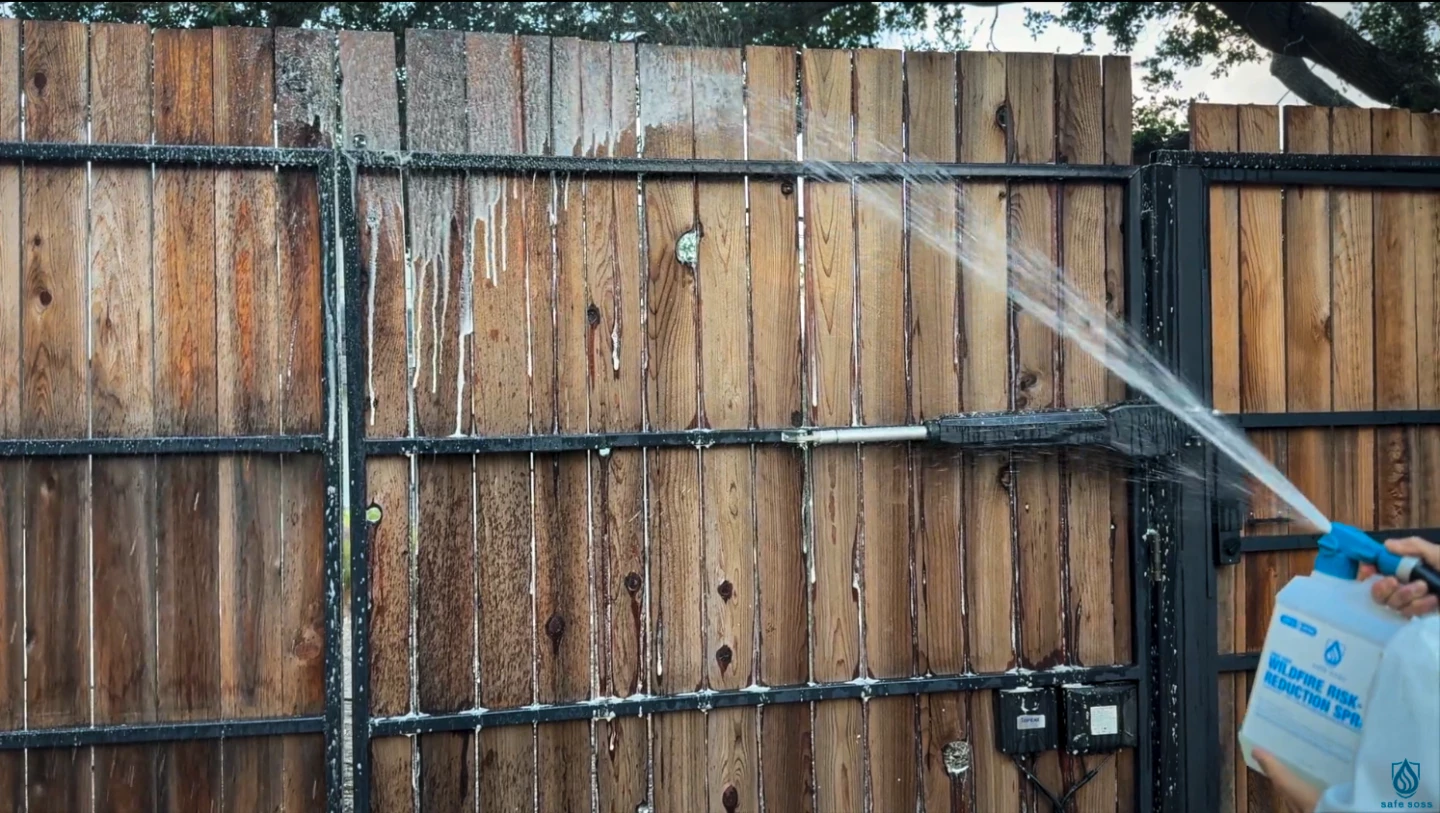
Surfaces should get the same level of attention. Soak fences and decks in flame retardant (you can make it at home by mixing boric acid and water). Check the sidings at least once a year to cut overgrown vines. When mulching near a building, go for inorganic options like pebbles.
This might seem like a lot of work, but you can use a lot of the byproduct from these chores. Trimmings can be used for compost, or for animal bedding. After a while, it just becomes a part of gardening.
Conclusion
We never think a wildfire is going to damage or even destroy our home until it happens. Taking the necessary precautions to avoid catastrophe can seem exhausting, but it’s still less effort than you would have to spend rebuilding. If you live in an are where wildfires are prolific, this is definitely something to consider.
Thank you,
Glenda, Charlie and David Cates
Let us know if you enjoyed this post!

Like

Love

Happy

Haha

Sad