
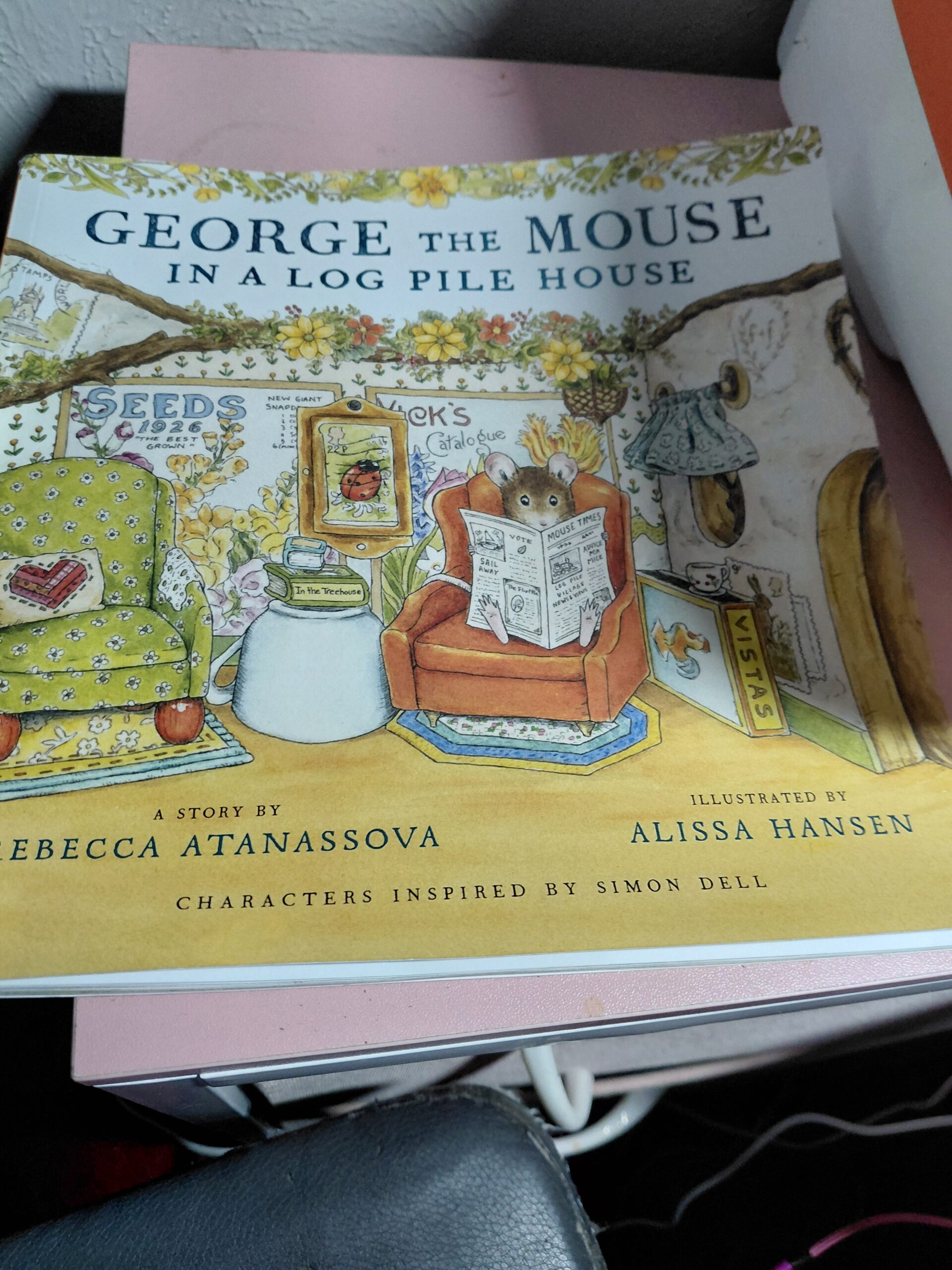
Earlier, my family shared a full review of George the Mouse in a Log Pile House (George the Mouse Books) by Rebecca Atanassova, going through the story itself, the illustrations, and the gentle way the author introduces ideas like curiosity, courage, and what it means to find your way home. That review focused on the book in a traditional sense, what happens in it and how it reads from beginning to end. Along with how much my family enjoyed the story.
This post is a little different, because not every book needs another review. Some books deserve a second space where we talk about how they actually live in a home, in a classroom, in a homeschool day, or even in those quiet evening moments when everything finally slows down. George the Mouse in a Log Pile House is one of those books that doesn’t really end when you close it. It settles into the rhythm of your day in a softer way.
George the Mouse in a Log Pile House is one of those stories that feels simple on the surface, but the more you sit with the story, the more you realize it’s doing something very steady in the background. It follows a small mouse named George who lives in a cozy log pile tucked away in a garden, safe and familiar, until curiosity starts to pull him beyond the edges of what he knows
. From there, the story gently follows his journey into a wider world filled with unfamiliar places, small moments of wonder, and experiences that don’t always feel certain but still feel worth exploring. And somewhere in that movement away from home, and eventually the pull back toward it, the story starts to say something very quiet about bravery and belonging without ever turning it into something heavy or overwhelming.
What makes George the Mouse in a Log Pile House especially useful in a homeschool setting is not that it teaches in a direct way, but that it slows everything down. Homeschool days can be full, even when they’re good days, and by the time evening comes around there is often a natural need for something that shifts the energy of the home
George the Mouse in a Log Pile House is the kind of book that fits into that space without asking for anything back. It doesn’t turn reading time into a lesson or a test. It just creates a moment where children can listen, follow along, and start to notice things without being pushed to analyze them. Over time, that kind of gentle reading builds something important, not just comprehension, but attention, patience, and comfort with quiet thinking.
In a classroom, this same quality becomes just as valuable, but in a different way. It works well when the day is winding down or when students need a calm transition between more structured parts of learning. It’s the kind of story that can be read aloud without needing a big discussion afterward, although it naturally opens the door to small conversations if a teacher chooses to use it that way.
Children tend to respond to the storyt in different ways, some focusing on the idea of adventure, others noticing the idea of home, and others simply enjoying the feeling of being read to without pressure to perform or answer correctly. That flexibility is part of what makes George the Mouse in a Log Pile House work across different ages and reading levels.
At home, especially in family reading time, George the Mouse in a Log Pile House naturally becomes something that slows the room down. When it’s read aloud at night, there is a noticeable shift in energy. Things feel quieter without needing to be instructed to be quiet.
Children settle more easily because the story itself isn’t pushing toward excitement or urgency. Instead, it gives them something steady to listen to while they begin to transition out of the busier parts of their day. It becomes less about finishing a book and more about sharing a moment together before the day ends.
This is also why George the Mouse in a Log Pile House fits so naturally into summer reading lists or gift guides. Summer reading doesn’t always need to be about challenge or complexity. A lot of the time, families are just looking for books that keep reading alive in a way that feels easy and unforced.
George the Mouse in a Log Pile House works well in that space because it can be read independently, but it also works beautifully as a shared read. It doesn’t demand follow-up work or structured activities to feel meaningful. It simply adds something calm to a child’s reading life, and that is often what makes a book memorable over time.
If families do want to extend it slightly, it usually happens best through conversation rather than structured activities. A child might talk about what it would feel like to explore somewhere new, or what “home” means after seeing George’s journey, or they might draw what they imagine his log pile home looks like. These moments don’t need to be turned into assignments. They just happen naturally when a story leaves a soft impression instead of a loud one.
For me, what stands out most about George the Mouse in a Log Pile House is not any one part of the story, but the way it changes the tone of the environment around it. It doesn’t demand attention. It invites it. It doesn’t rush a reader forward. It slows everything down just enough to notice what is already there. In a homeschool day that is often full of movement and structure, that kind of softness becomes surprisingly valuable. It creates space where there wasn’t space before.
This second post exists alongside the original review for that reason. The first post explains the book. This one explains what the book becomes once it’s part of everyday life. Some stories are meant to be analyzed and moved on from. Others stay a little longer than expected, not because they are complicated, but because they are comfortable to return to.
George the Mouse in a Log Pile House is one of those books.
Thank you,
Glenda, Charlie and David Cates
Let us know if you enjoyed this post!

Like

Love

Happy

Haha

Sad