
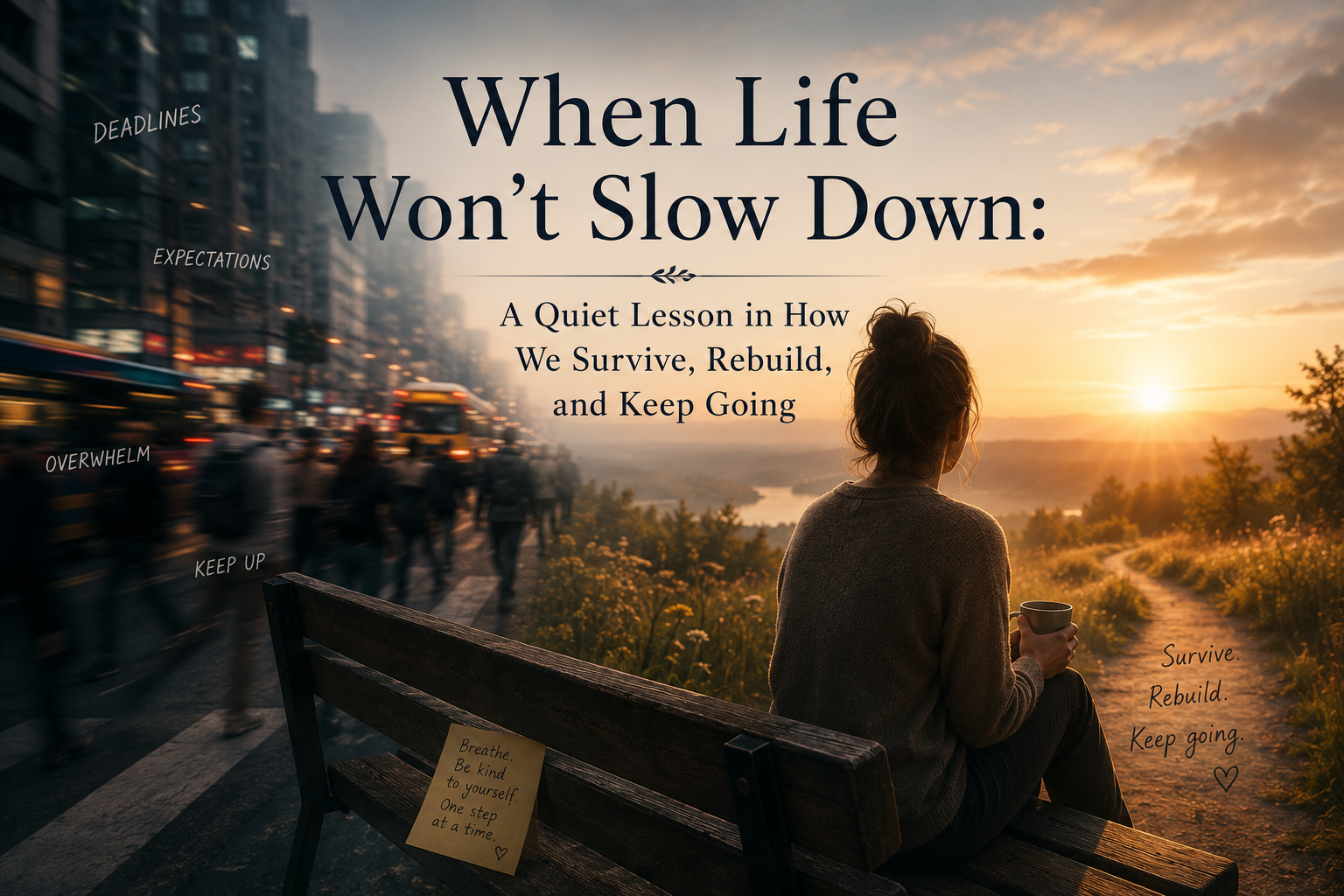
For me this morning started like most mornings in our house do—too fast, too loud, and already carrying more weight than I had the energy for. Gerald needed something, the phone was buzzing with a check in message from David, and I remember standing in the kitchen just trying to remember what I walked in there for in the first place. It was one of those moments where everything feels slightly unstable, even though nothing is technically “wrong.” Just life piling up in ordinary ways that still manage to feel heavy.
That feeling is exactly Why We Suffer and How We Heal landed so deeply with me. What struck me first from the book wasn’t theory or psychology—it was the honesty underneath it. The idea that instability isn’t something we always get to fix or escape, but something we learn to move through. That concept alone changes the way you read every page, especially if your life has ever felt like it’s running ahead of you while you’re still trying to catch your breath.
What makes this book different is how grounded it feels in real human experience. Suzan Song doesn’t write like someone standing outside of suffering trying to define it. She writes like someone who has sat in it with people—survivors of war, trauma, displacement, and loss—and still found patterns of how healing actually begins to take shape in real life, not just in a therapy room.
There’s a moment in the book where everything comes back to something very simple, but not easy: the way we hold our stories. Not the polished version we tell others, but the messy internal narrative we replay when things are quiet. Reading that made me think about my own family life—the way we carry stress from one day into the next without even realizing it, like we’re passing invisible weight from person to person without meaning to.
I like how the Author has written a self-help book that doesn’t rush to fix that. Instead, it slows you down enough to notice it. What stayed with me most was the idea that healing doesn’t only live in understanding. So many of us already understand why we hurt, why we react, why certain seasons of life feel harder than others. But understanding alone doesn’t always change how we live the next day. This is where the book shifts into something more practical and surprisingly gentle.
It points toward ritual—not as something religious or formal, but as the small, repeated things that help us stay anchored. The kind of routines we build without even naming them: how we start our mornings, how we end our nights, the habits we fall back on when life feels overwhelming. It reframes those small patterns as bridges between knowing and actually changing.
Then there’s purpose, which in this book doesn’t feel like pressure or achievement. It feels more like direction. Not “what do you want to accomplish,” but “what helps you keep going when life doesn’t make sense.” That distinction matters, especially in seasons where survival takes more energy than planning.
By the time I finished reading, I didn’t feel like I had been given answers. I felt like I had been given something steadier than that—permission to stop expecting life to be stable before I allow myself to feel grounded in it.
And that is what makes y Why We Suffer and How We Heal worth sitting with. It doesn’t try to remove suffering from life. It teaches you how to stand inside it without losing yourself.
About the book:
A psychiatrist who has dedicated her life to treating global survivors of unspeakable horrors shares the three keys to resilience that we can use to weather stress, loss, and trauma in our own lives.
“This book is a gift of empathy and lived wisdom—rare, real, and deeply human.”—Dr. Koen Sevenants, former global lead for Mental Health and Psychosocial Support in Emergencies for UNICEF’s Child Protection Area of Responsibility
In her debut book, Dr. Suzan Song draws from patient stories, humanitarian research, and her own life to help readers release their unrealistic longing for stability and open them up to a new, healthier mindset. As uncomfortable as it is, instability, Dr. Song suggests, is what ultimately invites us into transformation.
From her clinical practice in the United States to her global work over two decades with survivors of human rights violations, Dr. Song has uncovered three keys to resilience: Narrative, Ritual, and Purpose. Western therapy teaches that we heal by examining our influences, inner conflicts, and goals. This is vital work, but insight alone does not lead to lasting change.
Song has found that rituals, whether private or community-based, create the bridge from insight to change. She brought this observation back to her clinical work along with the third potent source of healing: Purpose. Whatever you’re going through, these three tools can help you not only weather the winters of life but thrive through them.
Profoundly insightful and beautifully written, Why We Suffer and How We Heal offers a groundbreaking new path to deep healing and finally feeling alive again.
Meet the Author: Suzan Song MD PhD

Dr Suzan Song is a Harvard- and Stanford-trained psychiatrist, medical anthropologist and humanitarian mental health adviser. For more than two decades, she has dedicated her work on building resilience in individuals and communities affected by adversity – from everyday struggles to the world’s most challenging environments of war and human trafficking. Dr Song has advised the United Nations, multiple U.S. federal agencies and Ministries of Health, shaping systems of care for children and families in crisis to bridge clinical innovation with systems reform and localized approaches.
She has a private practice in Washington D.C., is a professor of psychiatry at George Washington University and a sought-after speaker on leadership resilience, systems change and the science of healing. Her mission is to bridge clinical reality and systemic change, bringing the lessons of human survival into leadership, policy and programmes that can transform lives at scale.
Thank you,
Glenda, Charlie and David Cates
Let us know if you enjoyed this post!

Like

Love

Happy

Haha

Sad