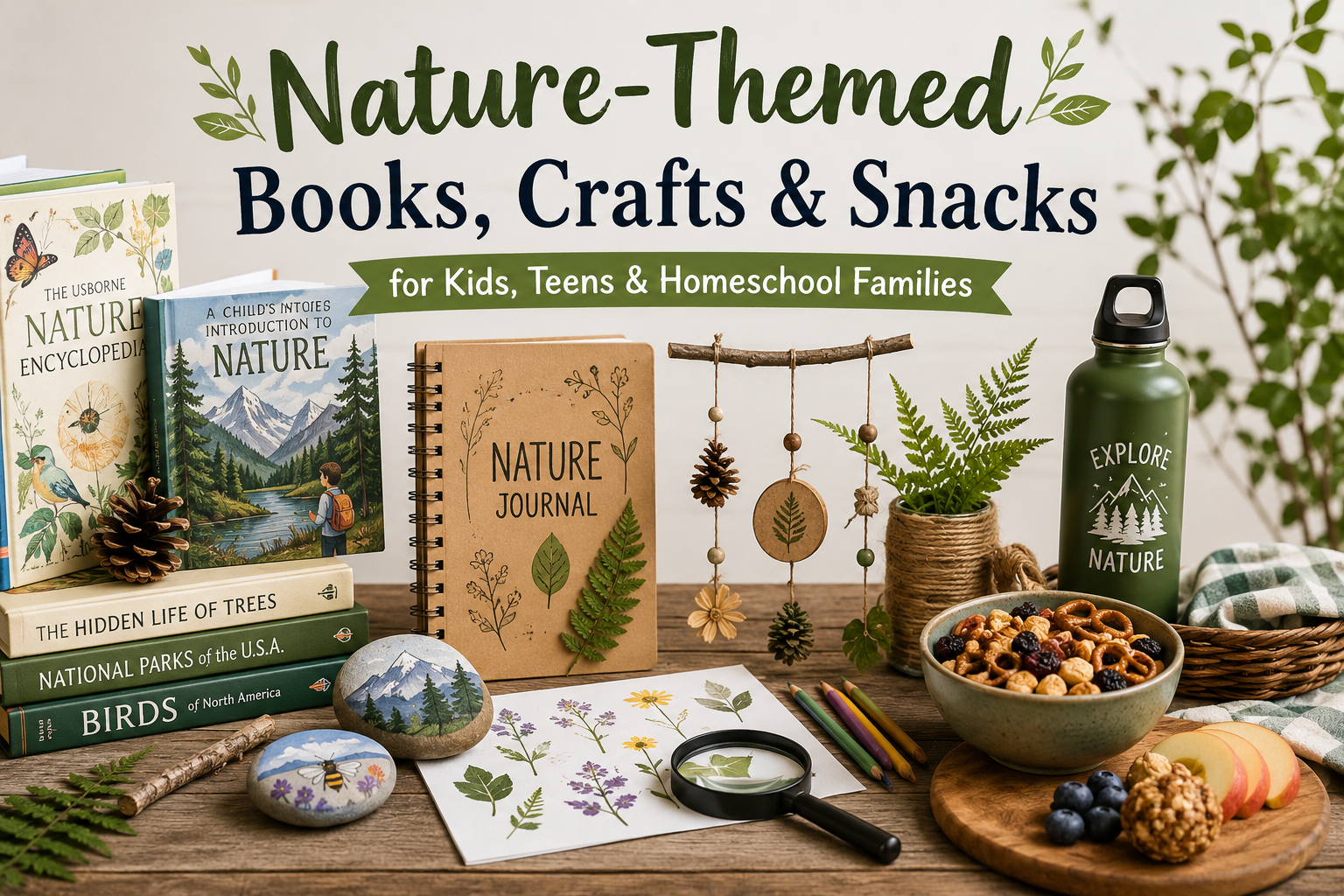
A lot of children will be getting out of school next week, but some #Homeschool families go year-round to school I thought you might like to have something to do with the kids because learning shouldn’t stop in Summer. Here is a list of Nature-Themed Books, Crafts & Snacks for Kids, Teens & Homeschool Families
I also wanted to remind you Nature-themed learning doesn’t belong to one season. Even though this originally started as Earth Day inspiration, these ideas work just as well at the end of the school year, during summer break, or on any day when families need something simple, calm, and meaningful that doesn’t require a lot of planning.
Right now, especially, families are in that in-between space where school is wrapping up for some families, while other families are preparing for summer learning as routines are shifting, and kids have extra energy without structure. That usually creates the need for easy activities that feel fun but not overwhelming, creative but not messy, and educational without feeling like school is still in session.
That is exactly what this Nature-Themed Books for Kids, Teens, and Homeschool Families was created. It works for homeschool families finishing their year, after-school families looking for something steady, bonus families blending routines, and teens who pretend they are not interested until snacks are involved.
Nature-Themed Books for Kids, Teens, and Homeschool Families
I believe books are one of the easiest ways to bring nature into everyday life without turning it into a formal lesson. Books give children a way to slow down, observe, and connect stories to the world around them.
For younger children, picture books are the most effective starting point. Stories like The Earth Book by Todd Parr, I Can Save the Earth!, Compost Stew, and The Tiny Seed by Eric Carle introduce nature in a gentle and visual way. At this age, the learning happens through noticing rather than explaining. Colors, animals, plants, and weather naturally become part of the conversation.
For elementary-aged kids, stories begin to carry more meaning and real-world connection. Books such as The Lorax, We Are Water Protectors, One Plastic Bag, and The Great Kapok Tree help children understand that small actions matter and that the world is shaped by choices. This is the stage where simple reflection questions work best, especially asking what they think they could do to help the earth in their own way.
For teens, the connection shifts toward real-world systems and personal relevance. Books like Plasticus Maritimus, It’s Getting Hot in Here, work well because they blend science, creativity, and observation without feeling overly structured or school-like.
I don’t know about your teens but Charlie and even B responded better when they feel like they are discovering rather than being taught. Homeschool families can easily use these books as flexible learning tools instead of formal curriculum. They fit naturally into lighter days when attention spans are shorter, and the school year is winding down.
Simple Nature Crafts That Fit Real Family Life
When Charlie was #Homeschooling full time we would do crats and I wanted to remind you crafts do not need to be complicated to be meaningful. The goal is connection, creativity, and calm, not perfection or long cleanup.
One of the easiest activities is turning toilet paper rolls into binoculars. Kids decorate them, tape them together, and use them for a simple nature walk. What starts as a regular walk turns into the kids becoming a “nature detective” and they begin noticing details they would normally walk past.
Another simple idea is a recycled bird feeder made from a plastic bottle and a wooden spoon. The spoon becomes a perch while birdseed fills the bottle. This naturally leads to conversations about animals, food sources, and how nature works together in quiet systems children can actually observe.
Seed starter cups made from egg cartons are another easy favorite for children to make because they extend beyond one afternoon. Kids plant seeds, water them, and watch them grow over time. It becomes a small daily reminder that care and consistency matter.
Nature collages work especially well for families who want something flexible and low-pressure. A short walk outside becomes part of the craft as kids collect leaves, flowers, and small sticks to create artwork at home. It naturally encourages observation without feeling like instruction.
Painted kindness rocks often become more meaningful than expected. Children paint simple designs or encouraging words and place them in safe outdoor spaces. It turns a small craft into something that extends kindness beyond the home.
Easy Nature-Inspired Snacks Kids Actually Eat
Another fun fact I wanted to share with you is how food naturally brings energy and connection into any activity, and these snacks are simple enough to feel fun without becoming complicated. The foods we use will not break the bank and most of the time they are in our pantry.
A basic fruit cup made with blueberries and green grapes naturally creates a land-and-water effect that children immediately recognize. This becomes an easy entry point into talking about nature without needing explanation.
A rainbow veggie plate works well for after-school moments when kids are already looking for something to eat. The value is not in perfection but in letting children build and choose what they want.
Yogurt bowls topped with fruit can also be turned into a simple creative moment using blueberries and kiwi to create earth-like patterns. It does not need to look perfect to feel intentional.
Families with pets can even include the pets in the experience by offering safe treats alongside the children’s snacks. It turns an ordinary moment into something shared rather than separated.
A Simple Way to Bring It All Together
The easiest way to use all of this is to keep it flexible and natural. Start with a short book to set the tone. It does not need to be read perfectly or even finished. The goal is simply to create a shared moment of focus.
Move into a simple craft that does not require complicated instructions or heavy cleanup. Something kids can start and finish without frustration works best. Follow it with a snack break that feels relaxed and enjoyable rather than structured.
If you want, take a quick photo to capture the moment, but it is not required. The point is connection, not documentation. End with a simple question about what they noticed or enjoyed. That alone turns the experience into something meaningful without turning it into a lesson. The entire flow stays light, flexible, and realistic for busy families.
Not only that most of these activates can be done outside allowing the kids to move around and to get fresh air while enjoying the Nature around them. More times than not when Charlie and I took our lessons outside the kids in the neighborhood would join us and they learned as well.
Nature-Themed Shirts and Family Moments
Simple themed shirts can make everyday activities feel more intentional without adding effort. Families often enjoy wearing them during outdoor time, park visits, or end-of-school celebrations. The best designs are simple and comfortable so even older kids and teens feel included without pressure. Families can make the shirts themselves or purchase shits, but I also enjoyed making our own.
Including Pets in Everyday Learning
Pets like our dogs Pheobie and Bear naturally become part of family life, so including our pets in these moments makes everything feel more real and connected. The pets can join outdoor walks, sit nearby during crafts, or simply appear in photos. Even small, shared moments outdoors help children understand that nature includes all living things, not just plants and people.
Why Simple Nature Activities Matter Right Now
At the end of the school year, families do not need complicated plans or structured lessons. They need simple moments that bring everyone together without stress. These activities matter because they slow things down just enough for kids to notice their surroundings again.
They encourage creativity without pressure and connection without screens or schedules. Most importantly, they create memories that feel natural instead of planned. And those are often the ones that last the longest.
Thank you,
Glenda, Charlie and David Cates
Let us know if you enjoyed this post!

Like

Love

Happy

Haha

Sad