I don’t know about you but for me there is a certain kind of childhood memory that doesn’t fade, even years later. Thar can be small chair. A brush moving through a doll’s hair. Or the quiet focus of someone “getting ready.” For many families, that memory is tied to real places—salons, barbershops, kitchen trims, or familiar hands that always seemed to know exactly what they were doing.
For my family hair has a way of holding family history inside it. Not just as appearance, but as routine, care, and connection. Some children grow up watching relatives work in salons, listening to conversations while someone’s hair is being shaped and styled.
Others know the steady rhythm of a local barbershop, where the same chair, the same tools, and the same familiar faces become part of growing up. Even home haircuts, beauty schools, or budget-friendly salons become part of that same lived-in story of care.
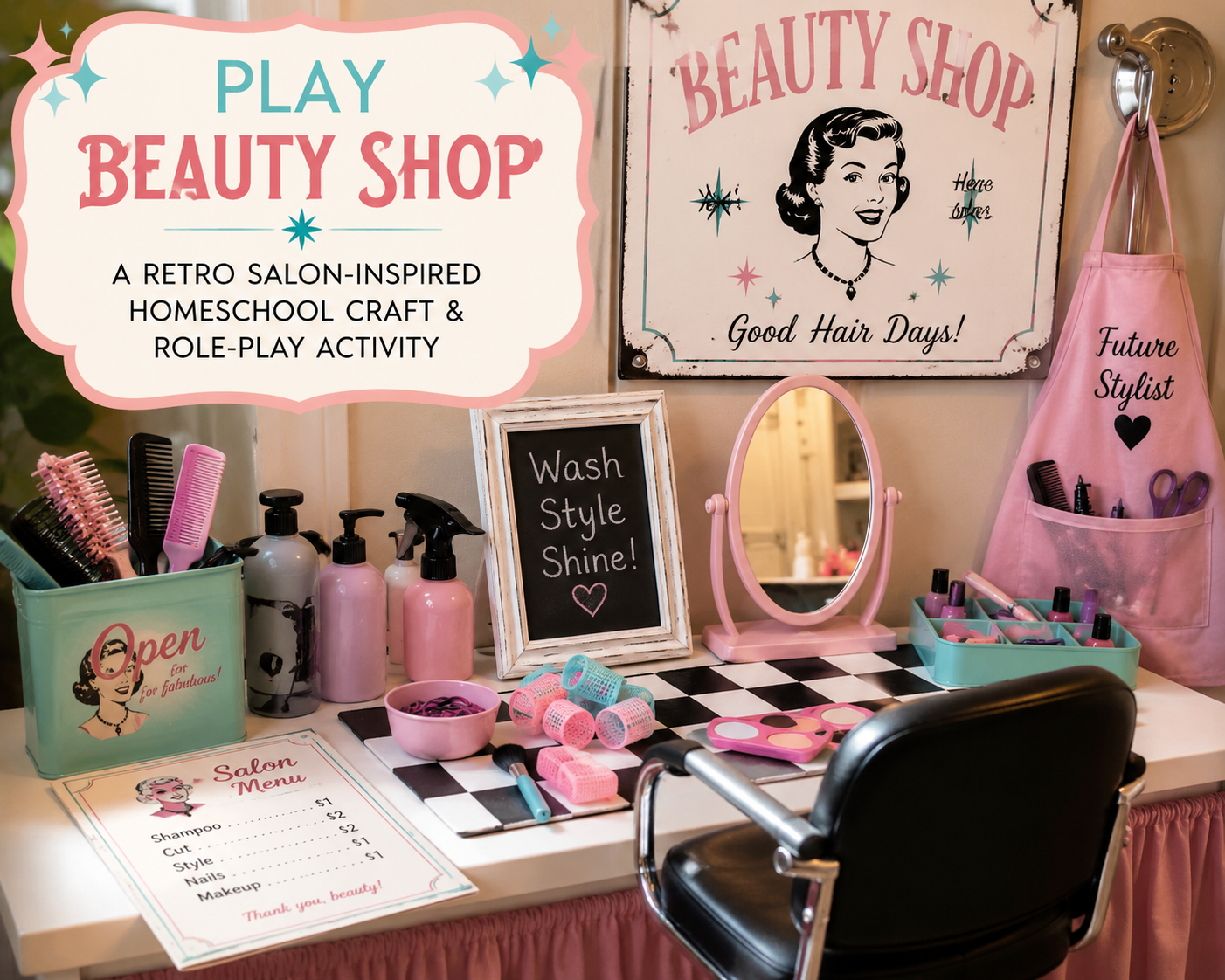
That’s what makes “Play Beauty Shop” such a natural extension of real life. It isn’t just pretend play—it’s imitation of something children already see and understand. This can be done in real-life and also as a #Homeschool class.
In a home setup, that world can be recreated in a simple, hands-on way that doesn’t require anything elaborate. A doll head or styling toy can become the “client.” Yarn, string, or paper strips become hair that can be brushed, braided, cut, and restyled again and again.
A brush and comb give structure to the play, while clips and hair ties allow kids to section and manage their work like real stylists. A mirror adds the finishing touch, letting them see their results just like a real salon chair experience.
A beauty cape or towel draped around the shoulders turns the activity into something more intentional. It signals that something is happening, just like in a real haircut setting. Child-safe scissors can be introduced when working with yarn or paper hair, turning it into a safe way to explore trimming and shaping without pressure or perfection.
If you would like to expand the experience, a small spray bottle can be added for pretend styling, along with a basket or tray to hold supplies. These simple additions don’t complicate the activity—they just help children step deeper into the role they’re already naturally taking on.
For families who want to build a fuller “Beauty Shop Kit,” a few optional items fit naturally into the experience. Styling heads or doll heads with brushable hair, extra yarn in different textures and colors, headbands, clips, and small organizing containers all extend the play. None of it is required, but each piece adds another layer of creativity and repetition, which is where children learn best.
What makes play beauty shop work is not the supplies themselves, but the familiarity behind them. Children already understand the idea of hair care because they’ve lived around it and children have watched it happen, sat through it, or experienced hair care themselves. This activity simply gives them a way to recreate that world on their own terms.
Play Beauty Shop also fits comfortably across ages and interests. Some children will focus on styling and design. Others will treat hair care like storytelling or role play. Some will experiment endlessly with cutting, braiding, and rebuilding styles. There’s no single correct way to do it, which is why play beauty shop works so well in a homeschool or creative learning environment.
This is also what gives play beauty school a way to learn because it blends nostalgia, practical parenting ideas, and hands-on activity content into one searchable topic that tends to stay relevant over time. It connects everyday life with imaginative play in a way that doesn’t rely on trends or seasons.
In the end, “Play Beauty Shop” is less about pretending to run a salon and more about recognizing something children already know: hair is part of care, identity, and daily life. This activity simply gives them a space to explore that safely, creatively, and repeatedly.
Inside this post is my affiliate links. If you click on the links and make a purchase I will make a small percentage from the products you purchase.
Thank you,
Glenda, Charlie and David Cates
Let us know if you enjoyed this post!

Like

Love

Happy

Haha
Sad