
Living in Texas all my life I’ve always wanted to go see Bluebonnets in person and to take phots of my children with them and it never happened when they were little Now, that Charlie is grown he doesn’t have any interest in going with me but I was thinking this would make a nice date for David and I.
Or I can see if my friends would like to go with me. If not and you’re in the DFW area, would you want to go with me on the Ultimate Bluebonnet -Day Trip In DFW? If so, we can find an out of the way place for lunch and dinner on our way home.
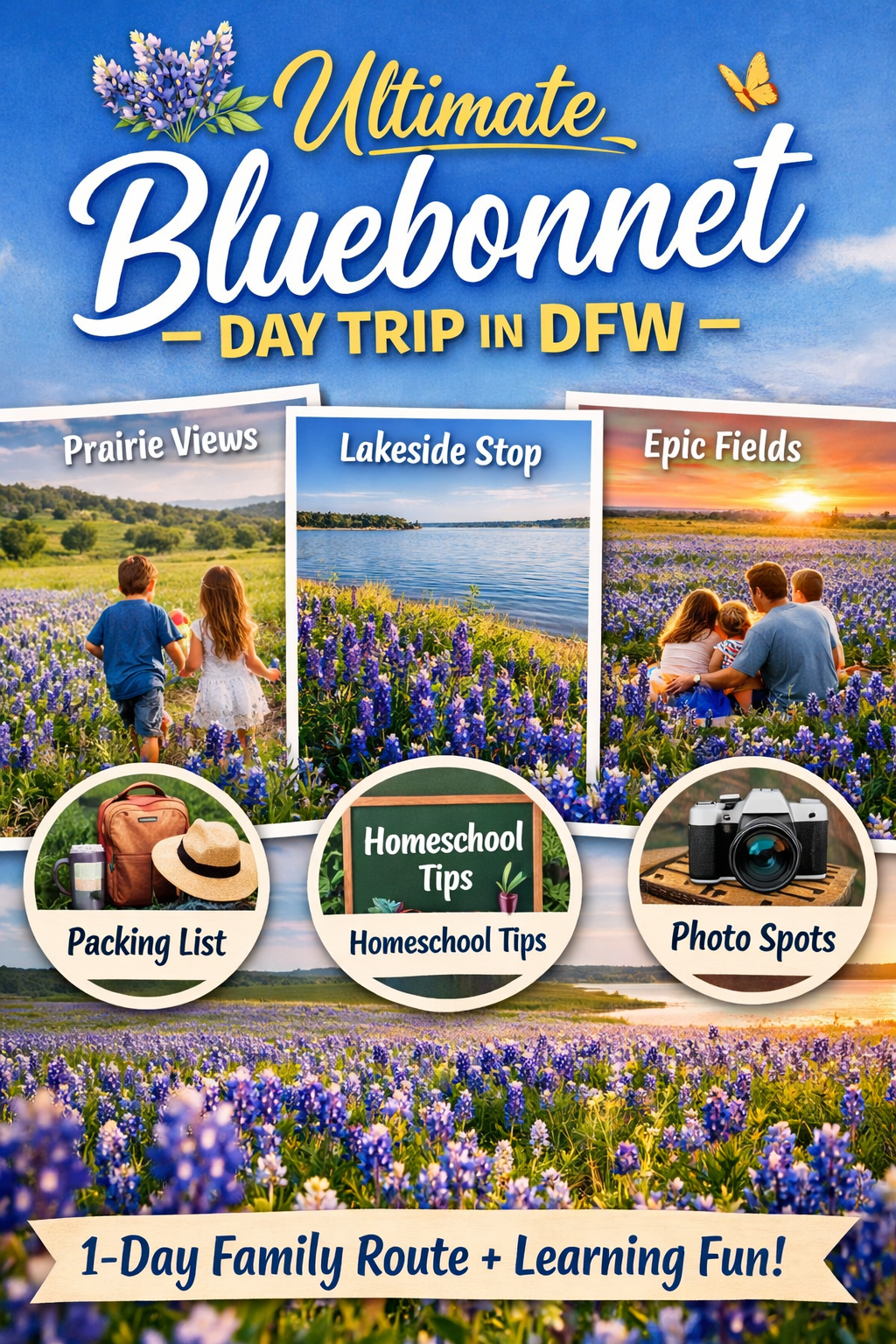
The Ultimate Bluebonnet Day Trip in DFW: A Family-Friendly Route + Homeschool Guide
Why Bluebonnet Season Matters in Texas
Every spring, Texas transforms into a landscape of vibrant blue thanks to its state flower—the bluebonnet. For families in the Dallas–Fort Worth area, this short blooming season (typically late March through mid-April) is the perfect opportunity to combine outdoor exploration, photography, and hands-on learning.
If you’re looking for a simple, meaningful way to get outside with your kids while also weaving in homeschool lessons, a bluebonnet day trip checks every box.
This guide gives you a done-for-you one-day route, plus practical tips, affiliate-ready product ideas, and easy educational tie-ins.
When to Go for Peak Bluebonnets
Timing is everything.
- Best weeks: Late March to mid-April
- Best days: Weekdays or early mornings on weekends
- Best time of day:
- Morning (7–9 AM): Fewer crowds, soft light
- Evening (5–7 PM): Golden hour photos
Tip: Check recent social media posts or local updates before heading out—blooms can vary depending on rainfall.
The Perfect 1-Day Bluebonnet Route (Starting Near Fort Worth)– This route is designed to minimize backtracking while giving you a mix of natural prairie, lakeside views, and large fields.
Stop 1: Prairie Views to Start the Day
Time: 7:30–8:30 AM
Start your morning in a natural prairie setting where bluebonnets grow wild and untouched.
What to expect:
- Rolling hills covered in native grasses
- Scattered bluebonnet clusters
- Quiet, uncrowded environment
What to do:
- Take early morning photos
- Let kids observe insects and birds
- Start a simple nature journal
Stop 2: Lakeside Wildflowers
Time: 9:15–10:30 AM
Next, head toward a lake area where bluebonnets grow alongside water views.
Why this stop matters:
- Adds variety to your photos
- Easy walking paths
- Great place for a snack break
Quick tip: Bring a lightweight blanket so kids can rest without sitting directly on damp ground.
Stop 3: Midday Trails + Picnic Break
Time: 11:30 AM–1:30 PM
By midday, move to a shaded nature preserve with trails and reliable blooms.
Best activities here:
- Picnic lunch
- Short hike
- Flower identification
Keep it simple:
Midday light isn’t ideal for photos, so focus on relaxing and learning instead.
Stop 4: Large Fields + Golden Hour
Time: 3:30–6:30 PM
End your day at one of the most well-known bluebonnet areas in North Texas.
What makes this stop special:
- Wide-open fields filled with blooms
- Perfect for family photos
- Best lighting of the day
Photo ideas:
- Kids walking through a path
- Sitting shots at flower level
- Wide landscape shots
What to Pack (Affiliate-Friendly Essentials)
Keep your packing list simple and practical. These are items families consistently use and are easy to recommend.
Comfort + Convenience
- Portable picnic blanket (water-resistant backing)
- Refillable water bottles
- Insulated cooler bag for snacks
- Wet wipes or hand sanitizer
Sun Protection
- Wide-brim hats for kids and adults
- Mineral sunscreen (reef-safe options are trending)
- Lightweight long-sleeve tops
Photo + Memory Tools Phone tripod or selfie stick Portable charger (essential for all-day use) Kids’ nature journals or sketchbooks
Learning Add-Ons
- Texas wildflower field guide
- Colored pencils or crayons
- Clipboard for outdoor writing
Turning This Trip Into a Homeschool Day
You don’t need a formal lesson plan. Use the environment around you.
Science (Primary Focus)
Topics to cover:
- What is a bluebonnet?
- Why do wildflowers bloom in spring?
- Role of pollinators (bees, butterflies)
Simple activity:
Have kids observe and write down:
- Flower color variations
- Types of insects seen
- Weather conditions
Geography
What to teach:
- Mapping your route across North Texas
- Differences between prairie and lake ecosystems
Easy activity:
- Print or draw a map
- Let kids trace your travel route
Writing
Adapt based on age:
- Younger kids: Draw the flowers and label them
- Elementary: Write 3–5 sentences about the trip
- Older students: 1-page reflection or travel journal entry
Prompt idea:
“What surprised me most about the bluebonnets…”
Math (Real-Life Application)
Keep it practical:
- Track miles between stops
- Estimate gas cost
- Count how many flowers in a small patch
Tips for a Stress-Free Trip
- Start early: Avoid crowds and heat
- Wear closed-toe shoes: Fields can be uneven
- Stay on paths when possible: Protect the flowers
- Avoid roadside stopping: Stick to safe, public areas
- Bring snacks: Saves money and prevents meltdowns
Photo Tips That Make a Big Difference
- Shoot at eye level with the flowers (not standing above)
- Use golden hour lighting whenever possible
- Avoid harsh midday sun for portraits
- Let kids move naturally instead of posing too much
Making This a Repeatable Tradition
Bluebonnet season is short—but that’s what makes it special.
Consider turning this into a yearly family tradition:
- Take photos in the same spot each year
- Track growth in your kids
- Build a seasonal scrapbook
Final Thoughts
A bluebonnet day trip doesn’t have to be complicated or expensive. With a simple route, a few essentials, and a flexible mindset, you can create a meaningful experience that blends nature, learning, and family time.
Whether you’re homeschooling full-time or just looking for a way to make the most of spring, this is one of the easiest ways to step outside and create lasting memories.
Quick Recap
Focus on experience over perfection
Go late March through mid-April
Follow a 4-stop route for variety
Pack simple, practical essentials
Add light homeschool activities
Thank you,
Glenda, Charlie and David Cates
Let us know if you enjoyed this post!

Like

Love

Happy

Haha

Sad